حصول تدريسي على براءة اختراع
عدد الزيارات: 27287955 مشاهدة
بواسطة: قسم هندسة الطب الحياتي
تاريخ النشر: 2025-05-08
اخر تصفح: 2025-08-20
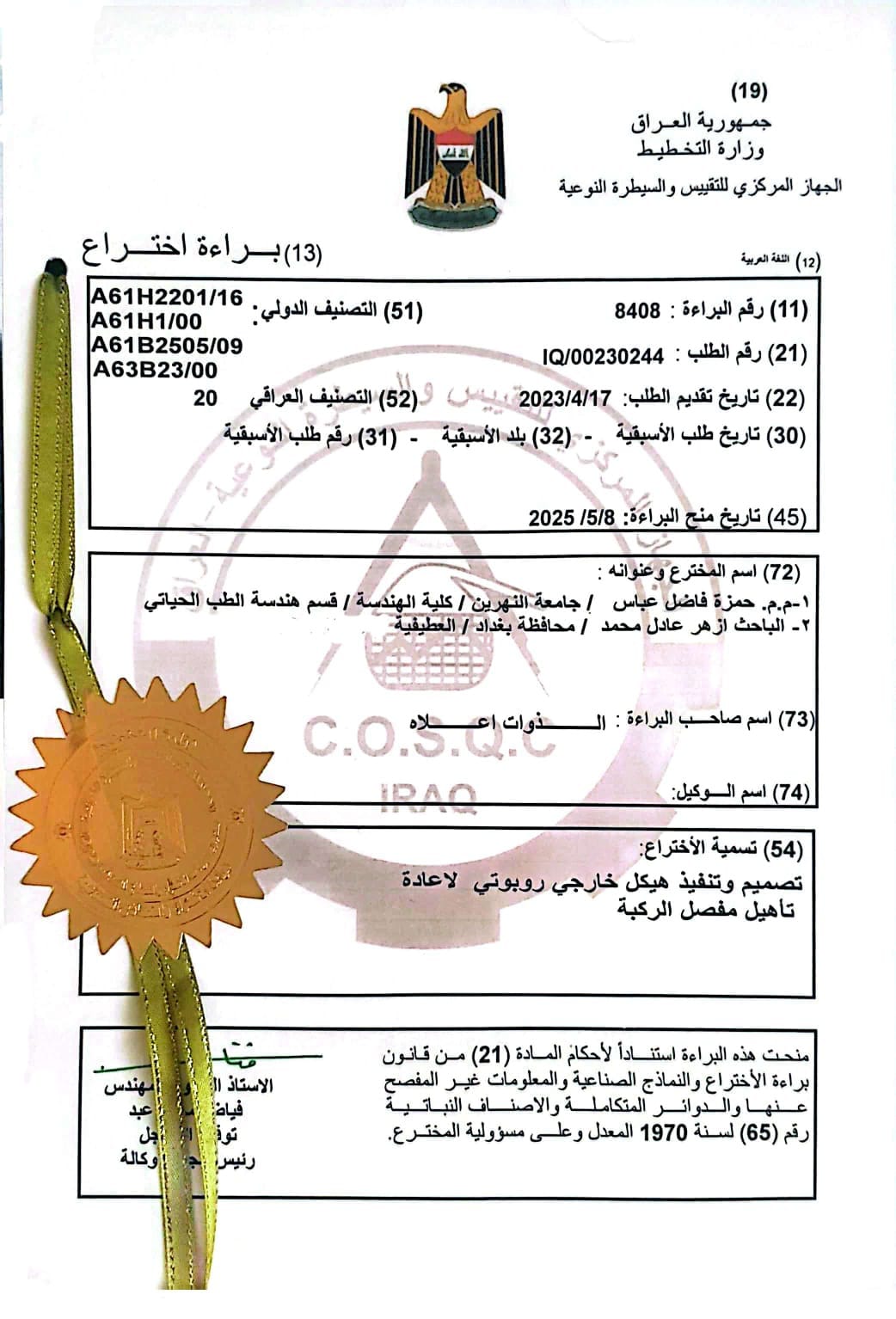
حصل التدريسي من قسم هندسة الطب الحياتي المدرس المساعد حمزة عباس فاضل بمشاركة المهندس ازهر عادل محمد احد خريجي قسم هندسة الطب الحياتي على براءة اختراع صادرة عن الجهاز المركزي للتقييس والسيطرة النوعية في وزارة التخطيط العراقية عنوانها؛
(تصميم وتنفيذ هيكل روبوتي خارجي لاعادة تاهيل مفصل الركبة)
وهذا التصميم للاشخاص الذين يعانون من مشاكل تحدد المفصل مابعد الاصابة او اجراء عمليات البتر للاطراف السفلى حيث ساهم الجهاز في تقليل الجهد المطلوب من المعالج الفيزيائي لما يقدمه من عملية تاهيل مؤتمته بالكامل وسهولة بالتركيب على الجسم من قبل المريض نفسه.
تصميم وتنفيذ هيكل روبوتي خارجي لإعادة تأهيل مفصل الركبة ضمن إنجازات قسم هندسة الطب الحياتي
وجاءت هذه البراءة في إطار دعم الابتكار والبحث العلمي التطبيقي، والتي تهدف إلى دعم المرضى في مراحل العلاج الفيزيائي بعد إصابات أو عمليات جراحية في الركبة.
ويتميز هذا الهيكل الروبوتي بخواص ذكية تسمح بتتبع حركة المفصل وتحليلها بدقة، مع إمكانية تعديل المقاومة ونطاق الحركة بناءً على حالة المريض ومرحلة التأهيل، مما يوفر برنامج إعادة تأهيل شخصي وآمن.
وقد تم تقديم هذا الابتكار للحصول على براءة اختراع نظرًا لما يحتويه من حلول تقنية متقدمة وخطوة ابتكارية واضحة، ليكون أحد أوائل المشاريع في هذا المجال محليًا، ويجسد الدمج الفعلي بين التكنولوجيا الطبية والهندسة الحيوية.
كما يهدف موضوع البراءة الى تطوير أدوات إعادة التأهيل الطبية، ويعزز من دور مهندسي الطب الحياتي في تحسين جودة الرعاية الصحية عبر تقنيات قابلة للتطبيق العملي والصناعي.
Assistant Lecturer Hamza Abbas Fadel, a faculty member from the Department of Biomedical Engineering, in collaboration with Engineer Azher Adel Mohammed, a graduate of the same department, has been granted a patent by the Central Organization for Standardization and Quality Control (COSQC) of the Iraqi Ministry of Planning. The patent is titled:
"Design and Implementation of an External Robotic Exoskeleton for Knee Joint Rehabilitation"
This innovative design targets individuals suffering from restricted knee joint movement due to injury or lower limb amputation. The device supports full automation of the rehabilitation process, significantly reducing the physical effort required from physiotherapists, while also being user-friendly and easy to attach by the patient.
The project stands as a notable achievement of the Biomedical Engineering Department, aligning with the department’s focus on applied scientific research and innovation to support patients during physiotherapy following knee surgeries or injuries.
The robotic exoskeleton is equipped with intelligent features that enable accurate tracking and analysis of joint motion. It offers adjustable resistance and range of motion tailored to the patient’s condition and rehabilitation phase, providing a personalized and safe rehabilitation program.
This invention was submitted for patenting due to its advanced technical solutions and clear innovative approach, marking it as one of the first of its kind locally. It exemplifies the integration of medical technology with biomedical engineering.
The aim of the patent is to advance the development of medical rehabilitation tools and to reinforce the role of biomedical engineers in improving healthcare quality through practically and industrially applicable technologies.
