مناقشة طالبة الماجستير جنات غالب قصاب
عدد الزيارات: 16409827 مشاهدة
بواسطة: قسم هندسة الطب الحياتي
تاريخ النشر: 2026-09-08
اخر تصفح: 2026-10-24
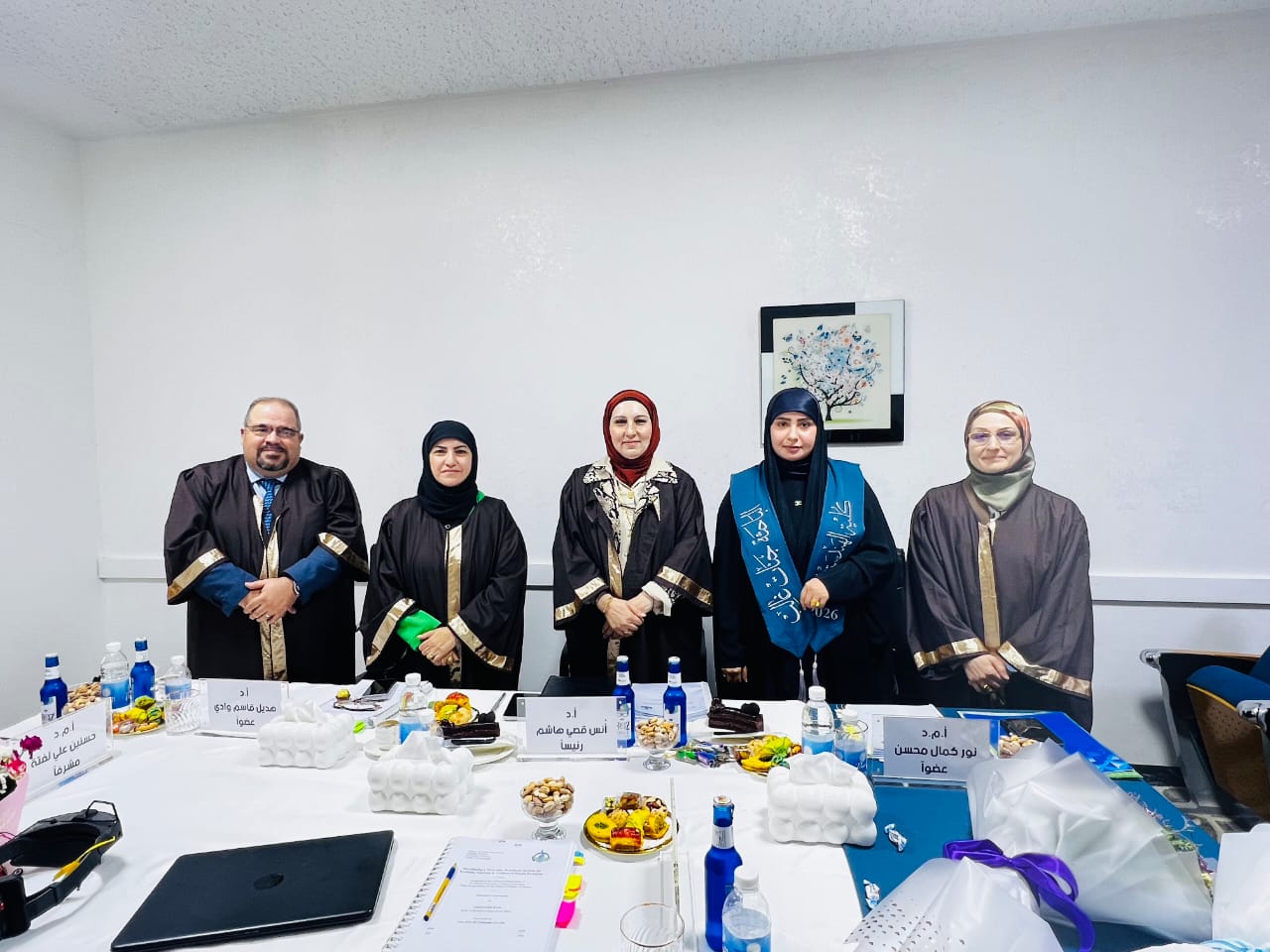
تمت في قسم هندسة الطب الحياتي / كلية الهندسة – جامعة النهرين مناقشة طالبة الماجستير جنات غالب قصاب شياع، وذلك يوم الثلاثاء الموافق 8/9/2026، عن رسالتها الموسومة: Developing a Wearable Prosthetic System for Eyeblink Analysis in Unilateral Facial Paralysis تألفت لجنة المناقشة من السادة: الأستاذ الدكتور أُنس قصي هاشم، كلية الهندسة / جامعة النهرين – رئيساً. الأستاذ الدكتور هديل قاسم وادي، كلية الهندسة / جامعة النهرين – عضواً. الأستاذ الدكتور المساعد نور كمال محسن، كلية الهندسة الخوارزمي / جامعة بغداد – عضواً. وجرت الرسالة بإشراف: الأستاذ الدكتور المساعد حسنين علي لفتة، كلية الهندسة / جامعة النهرين. هدفت الرسالة إلى تصميم وتطوير منظومة تعويضية متكاملة وقابلة للارتداء (Wearable Prosthetic System) لتحليل الرمش ودعم وظيفة إغلاق الجفن لدى المرضى المصابين بشلل الوجه أحادي الجانب، وذلك من خلال دمج تقنيات Surface Electromyography (sEMG) وElectrical Muscle Stimulation (EMS) ضمن منظومة واحدة للمساعدة في متابعة وظيفة الرمش ودعم عملية إعادة التأهيل. واعتمد النظام المقترح على التقاط الإشارة العضلية من العضلة المحيطة بالعين (Orbicularis Oculi) في الجانب السليم أثناء محاولة الرمش، ثم معالجة الإشارة وتحليلها واستخدامها لتوليد تحفيز كهربائي موجّه إلى الجانب المصاب، بهدف مساندة إغلاق الجفن وتعزيز التناسق الوظيفي بين جانبي الوجه. كما تضمنت الدراسة تطوير منهجية لمعالجة إشارات EMG واستخراج عدد من الخصائص الكمية، من بينها MAV وRMS وPeak Amplitude وIEMG، مع تقييم استقرار هذه الخصائص واختيار الأكثر ملاءمة لمتابعة التغيرات الوظيفية خلال جلسات التأهيل. ولتعزيز التقييم الموضوعي للتحسن، تم توظيف تحليل الفيديو باستخدام برنامج Kinovea لمتابعة حركة الجفن وقياس مؤشرات وظيفية مختلفة، شملت Minimum Closure Distance، Incomplete Closure Percentage، Blink Velocity، Eye Closure Percentage، وBlink Symmetry Index (BSI)، مما أتاح تقييم التغيرات الحركية في إغلاق الجفن ومقارنتها عبر مراحل التأهيل. وأظهرت نتائج الدراسة تحسناً تدريجياً في مؤشرات النشاط العضلي ووظيفة حركة وإغلاق الجفن عبر جلسات التأهيل، إلى جانب وجود فروق ذات دلالة إحصائية في التقييم الطولي، بما يدعم إمكانية توظيف المنظومة المقترحة كأداة قابلة للارتداء للمساعدة في المراقبة الموضوعية للتعافي الوظيفي لدى المرضى المصابين بشلل الوجه أحادي الجانب. وقد قُوّمت الرسالة علمياً من قبل: الأستاذ الدكتور علي حسين مري، جامعة بغداد / كلية الهندسة الخوارزمي – المقوّم العلمي الأول. الأستاذ الدكتور وجدي صادق عبود، جامعة النهرين / كلية الهندسة – المقوّم العلمي الثاني. كما قُوّمت لغوياً من قبل: المدرس الدكتور ميس عدي عبد الرسول، جامعة النهرين / كلية الهندسة – المقوّم اللغوي. وتم قبول الرسالة لكونها مستوفية لمتطلبات نيل شهادة الماجستير في تخصص هندسة الطب الحياتي. A Master’s thesis defense was held at the Department of Biomedical Engineering, College of Engineering, Al-Nahrain University, for the Master’s student Jannat Ghalib Qassab Shiaa on Tuesday, September 8, 2026. The thesis was entitled: “Developing a Wearable Prosthetic System for Eyeblink Analysis in Unilateral Facial Paralysis” The discussion committee consisted of: The thesis was supervised by: The thesis aimed to design and develop an integrated, wearable prosthetic system for analyzing blinking and supporting eyelid closure in patients with unilateral facial paralysis. The system integrates Surface Electromyography (sEMG) and Electrical Muscle Stimulation (EMS) technologies into a single platform to assist in monitoring blinking function and supporting the rehabilitation process. The proposed system captures the muscle signal from the Orbicularis Oculi muscle on the healthy side during an attempted blink. The signal is then processed and analyzed and used to generate targeted electrical stimulation to the affected side, with the aim of supporting eyelid closure and enhancing functional coordination between the two sides of the face. The study also included the development of an EMG signal-processing methodology and the extraction of several quantitative features, including Mean Absolute Value (MAV), Root Mean Square (RMS), Peak Amplitude, and Integrated EMG (IEMG). The stability of these features was evaluated, and the most suitable features for monitoring functional changes throughout the rehabilitation sessions were selected. To enhance the objective assessment of improvement, video analysis using Kinovea software was employed to monitor eyelid movement and measure various functional indicators, including Minimum Closure Distance, Incomplete Closure Percentage, Blink Velocity, Eye Closure Percentage, and Blink Symmetry Index (BSI). This enabled the assessment of kinematic changes in eyelid closure and their comparison across different stages of rehabilitation. The results demonstrated gradual improvement in muscle activity indicators and eyelid movement and closure function throughout the rehabilitation sessions. Statistically significant differences were also observed in the longitudinal assessment, supporting the potential use of the proposed system as a wearable tool for assisting in the objective monitoring of functional recovery in patients with unilateral facial paralysis. The thesis was scientifically evaluated by: The thesis was also linguistically evaluated by: The thesis was accepted after fulfilling the requirements for the award of the Master’s degree in Biomedical Engineering.


