مناقشة طالب الدكتوراه قيس احمد حبش في قسم هندسة الطب الحياتي
عدد الزيارات: 16404779 مشاهدة
بواسطة: قسم هندسة الطب الحياتي
تاريخ النشر: 2026-09-02
اخر تصفح: 2026-10-24
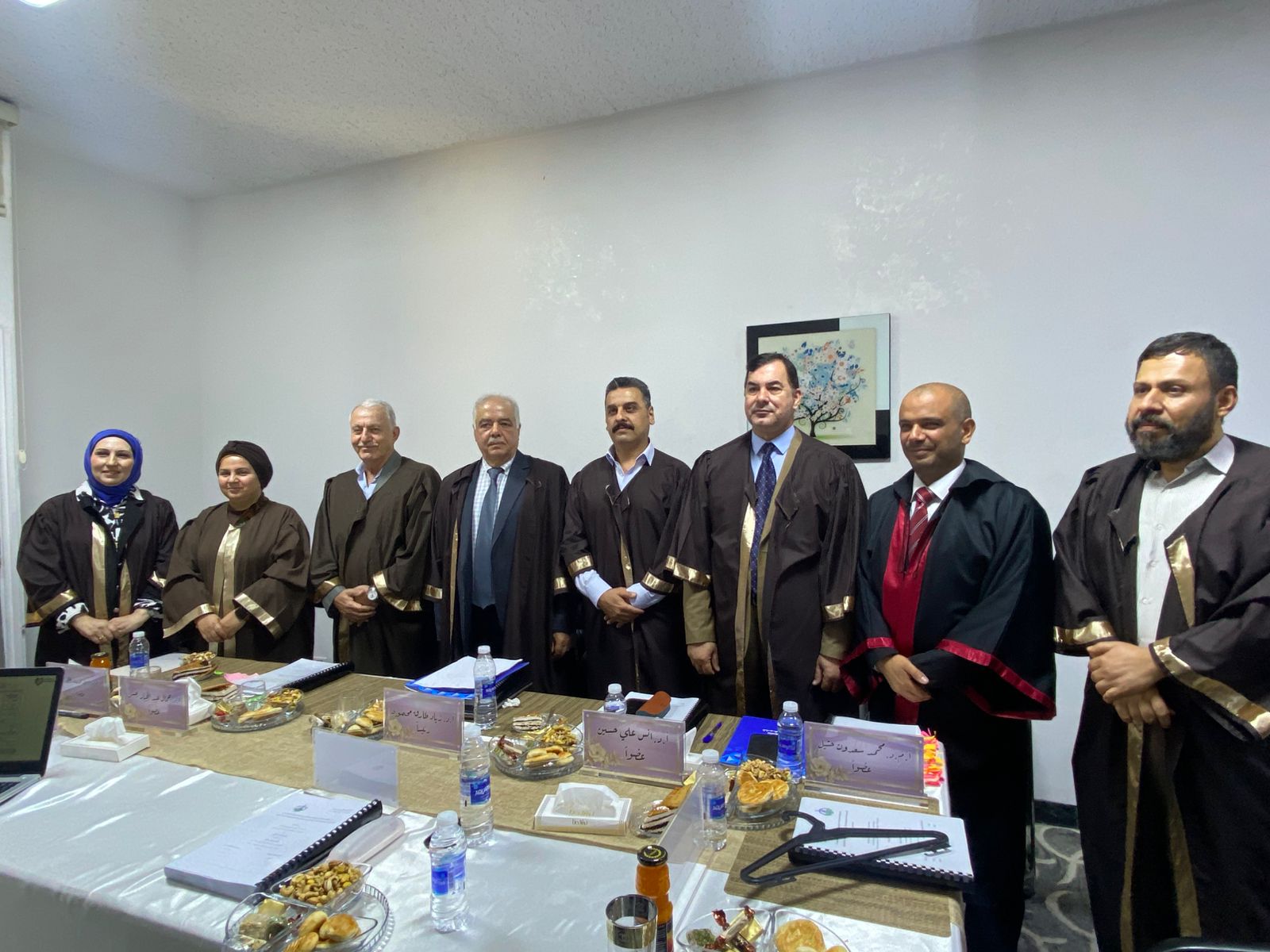
جرت في قسم هندسة الطب الحياتي بكلية الهندسة في جامعة النهرين، صباح يوم الأربعاء الموافق 2/9/2026، مناقشة أطروحة الدكتوراه للطالب قيس أحمد حجيش، والموسومة: “Comparative Analysis of Multimodal Artificial Intelligence Approaches Using Time-Frequency Distributions for Enhanced Biomedical Data Analysis” دراسة تحليلية مقارنة لنهج الذكاء الاصطناعي متعددة الوسائط المعتمدة على التوزيعات الزمنية الترددية من أجل تحسين وتحسين دقة تحليل البيانات الطبية الحيوية تألفت لجنة المناقشة من: الأستاذ الدكتور زياد طارق محمود الدهان، كلية الهندسة/جامعة البيان – رئيساً. الأستاذ الدكتور المتمرس جمال عبد الجبار حسن، كلية الهندسة/جامعة النهرين – عضواً. الأستاذ الدكتور أنس علي حسين، كلية الهندسة/جامعة النهرين – عضواً. الأستاذ المساعد الدكتورة أسيل محمد علي حسين، كلية الهندسة/جامعة النهرين – عضواً. الأستاذ المساعد الدكتور محمد سعدون حثيل، كلية الهندسة/جامعة بغداد – عضواً. وجرت الأطروحة بإشراف كل من: الأستاذ الدكتور أنس قصي هاشم، كلية الهندسة/جامعة النهرين. الأستاذ المساعد الدكتور احمد فائق حسين، كلية الهندسة/جامعة النهرين. هدفت الأطروحة إلى تطوير وتحليل مقاربات للذكاء الاصطناعي متعدد الوسائط من أجل تحسين تصنيف مرض ألزهايمر، وذلك من خلال دمج المعلومات الوظيفية المستخلصة من إشارات تخطيط كهربائية الدماغ (EEG) مع المعلومات التركيبية المستخلصة من صور الرنين المغناطيسي (MRI). تضمنت الدراسة استخدام مجموعة من توزيعات TF ، شملت توزيع (WVD)، وتوزيع (CWD)، والتحليل بالمويجات (WL)، بهدف تمثيل الخصائص غير المستقرة والمتعددة المقاييس في الإشارات والبيانات الطبية الحيوية. كما جرت مقارنة عدد من نماذج التعلم العميق، شملت الشبكة متعددة الطبقات (MLP)، والشبكة الالتفافية أحادية البعد (CNN1D)، وشبكة (ResNet1D)، وشبكة الذاكرة طويلة وقصيرة الأمد ثنائية الاتجاه (BiLSTM). أظهرت النتائج أن دمج EEG وMRI حقق أداءً أفضل بصورة منتظمة مقارنة باستخدام كل وسيلة منفردة، مما يؤكد أهمية الجمع بين المعلومات الوظيفية للدماغ والمعلومات التركيبية المستخلصة من صور الرنين المغناطيسي. كما حققت النماذج المعتمدة على التحليل بالمويجات أفضل متوسط لأداء الدمج، وحقق نموذج WL-Fusion-CNN1D أعلى دقة تصنيف بلغت 98.33%. وخلصت الدراسة إلى أن الدمج متعدد الوسائط القائم على توزيعات الزمن–التردد والتعلم العميق يمثل نهجاً هندسياً واعداً لتحسين تحليل البيانات الطبية الحيوية ودعم أنظمة التشخيص. كما بينت أن التحسن في الأداء ناتج عن تكامل المعلومات الوظيفية والتركيبية، وليس عن الاعتماد على نموذج تصنيفي واحد فقط. وقد كانت الاطروحة مستوفية لمتطلبات نيل شهادة الدكتوراخ في هندسة الطب الحياتي. “Comparative Analysis of Multimodal Artificial Intelligence Approaches Using Time-Frequency Distributions for Enhanced Biomedical Data Analysis” “A Comparative Analytical Study of Multimodal Artificial Intelligence Approaches Based on Time-Frequency Distributions for Enhanced Biomedical Data Analysis and Accuracy” The defense committee consisted of: Prof. Dr. Ziad Tariq Mahmoud Al-Dahan, College of Engineering, Al-Bayan University – Chair. Prof. Dr. Emeritus Jamal Abdul-Jabbar Hassan, College of Engineering, Al-Nahrain University – Member. Prof. Dr. Anas Ali Hussein, College of Engineering, Al-Nahrain University – Member. Asst. Prof. Dr. Aseel Mohammed Ali Hussein, College of Engineering, Al-Nahrain University – Member. Asst. Prof. Dr. Mohammed Saadoun Hthail, College of Engineering, University of Baghdad – Member. The dissertation was supervised by: Prof. Dr. Anas Qusay Hashim, College of Engineering, Al-Nahrain University. Asst. Prof. Dr. Ahmed Faiq Hussein, College of Engineering, Al-Nahrain University. The dissertation aimed to develop and analyze multimodal artificial intelligence approaches to improve the classification of Alzheimer’s disease by integrating functional information extracted from electroencephalography (EEG) signals with structural information obtained from magnetic resonance imaging (MRI). The study employed a range of Time-Frequency (TF) distributions, including the Wigner-Ville Distribution (WVD), Choi-Williams Distribution (CWD), and Wavelet Transform (WL), to represent the non-stationary and multiscale characteristics of biomedical signals and data. Several deep learning models were also compared, including the Multilayer Perceptron (MLP), One-Dimensional Convolutional Neural Network (CNN1D), ResNet1D, and Bidirectional Long Short-Term Memory (BiLSTM) networks. The results demonstrated that the integration of EEG and MRI consistently achieved better performance compared with using either modality individually, highlighting the importance of combining functional brain information with structural information obtained from MRI. The wavelet-based models achieved the highest average fusion performance, with the WL-Fusion-CNN1D model achieving the highest classification accuracy of 98.33%. The study concluded that multimodal fusion based on time-frequency distributions and deep learning represents a promising engineering approach for enhancing biomedical data analysis and supporting diagnostic systems. The findings also demonstrated that the improvement in performance resulted from the complementary integration of functional and structural information rather than reliance on a single classification model. The dissertation was approved as fulfilling the requirements for the award of a PhD in Biomedical Engineering.The Department of Biomedical Engineering at the College of Engineering, Al-Nahrain University, held the PhD dissertation defense of Qais Ahmed Hijaish on the morning of Wednesday, September 2, 2026. His dissertation was entitled:


