
مناقشة طالبة الماجستير آيات عباس كاظم
عدد الزيارات: 37461416 مشاهدة
بواسطة: قسم هندسة الطب الحياتي
تاريخ النشر: 2025-08-27
اخر تصفح: 2026-03-15
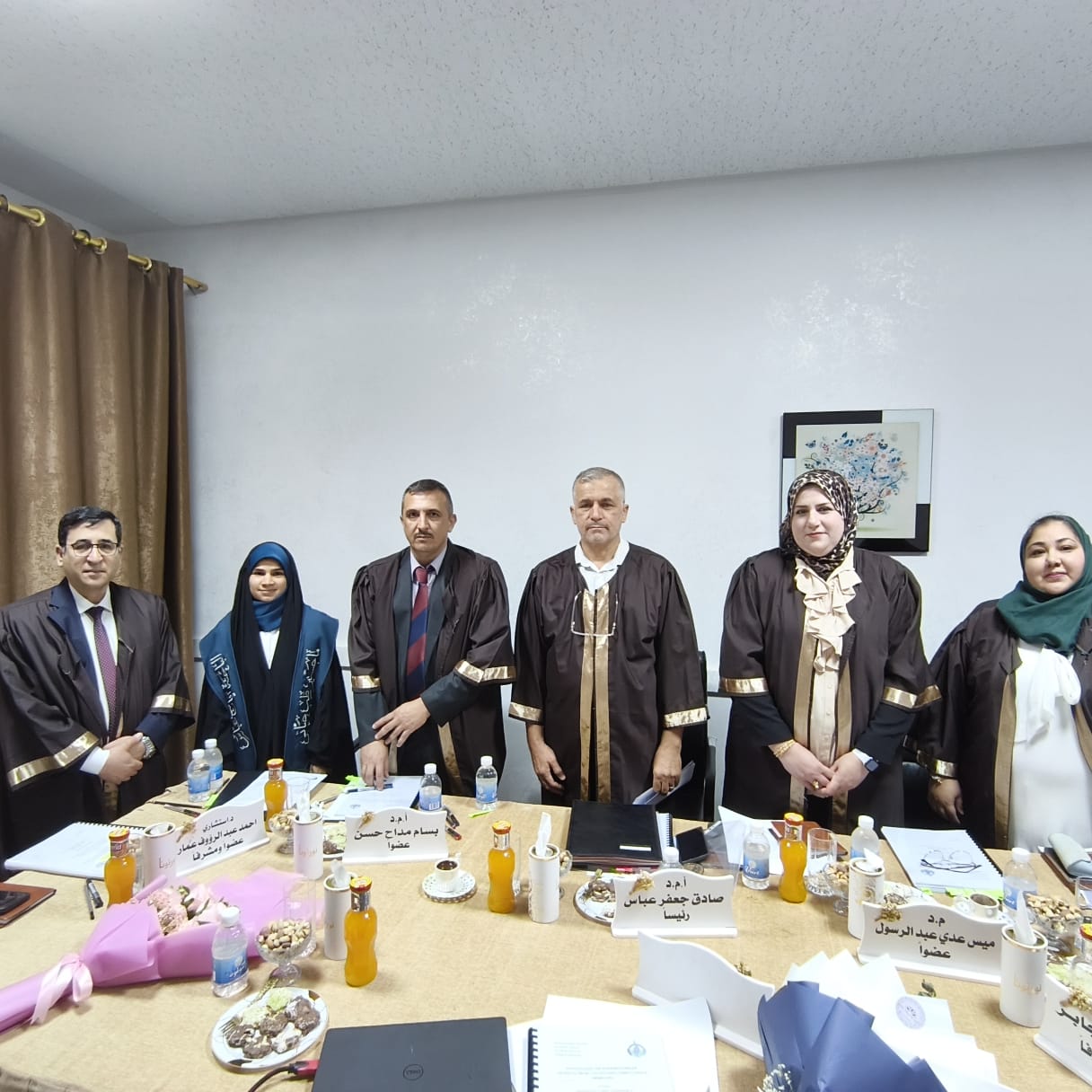
تمت في قسم هندسة الطب الحياتي مناقشة طالبة الماجستير آيات عباس كاظم ، وذلك يوم الأربعاء الموافق ٢٧/٨/٢٠٢٥، حول رسالتها الموسومة: Heamodynamic Analysis of Mechanical Aortic Valve using Computational Fluid Dynamics تألّفت لجنة المناقشة من: رئيس اللجنة: الأستاذ الدكتور صادق جعفر عباس المحترم عضوًا: الأستاذ الدكتور بسام مداح حسن المحترم عضوًا: المدرس الدكتور ميس عدي عبدالرسول المحترم وكانت الأطروحة بإشراف: المدرس الدكتور سمر علي جابر – كلية الهندسة / جامعة النهرين والدكتور الاستشاري احمد عبد الرؤوف عمار _ مستشفى ابن البيطار التخصصي لجراحة القلب وقد قُيّمت الأطروحة علميًا من قبل: المقوّم العلمي الأول: الأستاذ الدكتور حسام كاظم عبدالامير – كلية الهندسة الخوارزمي/ جامعة بغداد المقوّم العلمي الثاني: الأستاذ المساعد الدكتور فرحان احمد خماس – كلية الهندسة / جامعة النهرين كما قُوّمت لغويًا من قبل: المدرس الدكتور صفا ليث كيلان_كلية الهندسة/جامعة النهرين تهدف هذه الدراسة إلى تحليل ديناميكا الجريان الدموي عبر صمام القلب الصناعي الثنائي الشرفات (St. Jude Medical) باستخدام تقنيات ديناميكيات الموائع الحسابية (CFD)، مع التحقق العملي من النتائج من خلال منظومة تجريبية صُممت لمحاكاة ضخ القلب للدم. اعتمدت الدراسة على: نموذج ثلاثي الأبعاد مبسط يتضمن الصمام، الجيوب الابهرية، والشريان الأبهر الصاعد وجزء من البطين الايسر. -محاكاة حاسوبية باستخدام برنامج ANSYS Fluent 2022R1 لدراسة تأثير حركة الشرفات خلال عملية تدفق الدم على متغيرات الجريان. _تقديم دراسة mesh sensitivity من خلال مقارنة ثلاث قيم لل element size (2mm,1mm and 1mm) -عمل منظومة اختبار عملية منخفضة الكلفة تعتمد على مضخة تعمل بسيرفو موتور وتتحكم بها لوحة Arduino Uno، إضافة إلى تحضير مائع مماثل للدم (BMF) يحاكي لزوجة الدم البشري. وأظهرت النتائج أن: أعلى إجهادات قصية جداريةWSS ظهرت عند مرحلة الغلق الكامل للصمام قبيل بداية cardiac cycle قبل فتح الصمام خصوصًا على الأسطح العلوية والحواف الخلفية للشرفات(valve leaflets). عند الفتح الجزئي للصمام برزت مناطق إجهاد مرتفعة قرب الفتحات المركزية والجانبية اما التوزيع الضغطي أوضح أن الضغط الكلي بلغ ذروته عند الإغلاق الكامل وعند فتح الصمام بنسبة 75%، في حين ارتفع الضغط الديناميكي قرب أطراف الشرفات نتيجة اضطراب الجريان. الشبكة(element size) الأدق (0.5mm) حققت أفضل دقة عددية بقيمة Y⁺ = 4.3 ملائمة لنمذجة الاضطراب القريب من الجدار. تؤكد هذه الدراسة أن حركة شرفات الصمام ودقة الشبكة الحسابية عاملان حاسمان في محاكاة سلوك الدم حول الصمامات الصناعية، وأن دمج المحاكاة الحاسوبية مع التحقق التجريبي يوفر إطارًا قويًا لدراسات مستقبلية تشمل تأثير الشرايين التاجية ونمذجة التفاعل بين المائع والبنية (FSI). وقد قُبلت الأطروحة لاستيفائها متطلبات نيل شهادة الماجستير في هندسة الطب الحياتي The defense of the master’s student Ayat Abbas Kazem took place in the Department of Biomedical Engineering on Wednesday, 27/8/2025, regarding her thesis entitled: “Hemodynamic Analysis of Mechanical Aortic Valve using Computational Fluid Dynamics” The defense committee consisted of: Chairman: Prof. Dr. Sadiq Jaafar Abbas Member: Prof. Dr. Bassam Maddah Hassan Member: Asst. Prof. Dr. Mais Uday Abdulrasool The thesis was supervised by: Asst. Prof. Dr. Samar Ali Jaber – College of Engineering / Al-Nahrain University Consultant Dr. Ahmed Abdulraouf Ammar – Ibn Al-Bitar Specialized Center for Cardiac Surgery The thesis was scientifically evaluated by: First Scientific Reviewer: Prof. Dr. Hussam Kazem Abdulameer – Al-Khwarizmi College of Engineering / University of Baghdad Second Scientific Reviewer: Asst. Prof. Dr. Farhan Ahmed Khumais – College of Engineering / Al-Nahrain University The thesis was linguistically reviewed by: Asst. Prof. Dr. Safa Laith Kailan – College of Engineering / Al-Nahrain University This study aims to analyze the hemodynamics of blood flow through a bileaflet mechanical heart valve (St. Jude Medical) using Computational Fluid Dynamics (CFD), with experimental validation through a test rig designed to simulate the pumping action of the human heart. A simplified 3D model including the valve, aortic sinuses, ascending aorta, and part of the left ventricle. Computer simulations using ANSYS Fluent 2022R1 to study the effect of leaflet motion on flow variables. Mesh sensitivity study by comparing three element sizes (2 mm, 1 mm, and 0.5 mm). A low-cost experimental setup built with a pump driven by a servo motor controlled by an Arduino Uno, along with a blood-mimicking fluid (BMF) prepared to replicate human blood viscosity. The highest wall shear stresses (WSS) appeared at full valve closure just before the cardiac cycle begins, especially on the upper surfaces and trailing edges of the valve leaflets. During partial valve opening, regions of elevated stress emerged near the central and side orifices. Pressure distribution showed that total pressure peaked at full closure and at 75% valve opening, while dynamic pressure increased near leaflet tips due to flow disturbances. The finest mesh (0.5 mm) achieved the best numerical accuracy with Y⁺ = 4.3, suitable for near-wall turbulence modeling. This study confirms that leaflet motion and mesh resolution are critical factors in simulating blood behavior around mechanical valves. Combining computational simulation with experimental validation provides a strong framework for future studies, including the impact of coronary arteries and fluid–structure interaction (FSI) modeling.
The thesis was accepted as it fulfills the requirements for the Master’s Degree in Biomedical Engineering.
Study Objective:
Methodology:
Results:
Conclusion:


