
Visitors: 37733067 Views
Done By: Engineering Architectural Department
Post Date: 2026-03-18
Last Browse: 2026-03-21
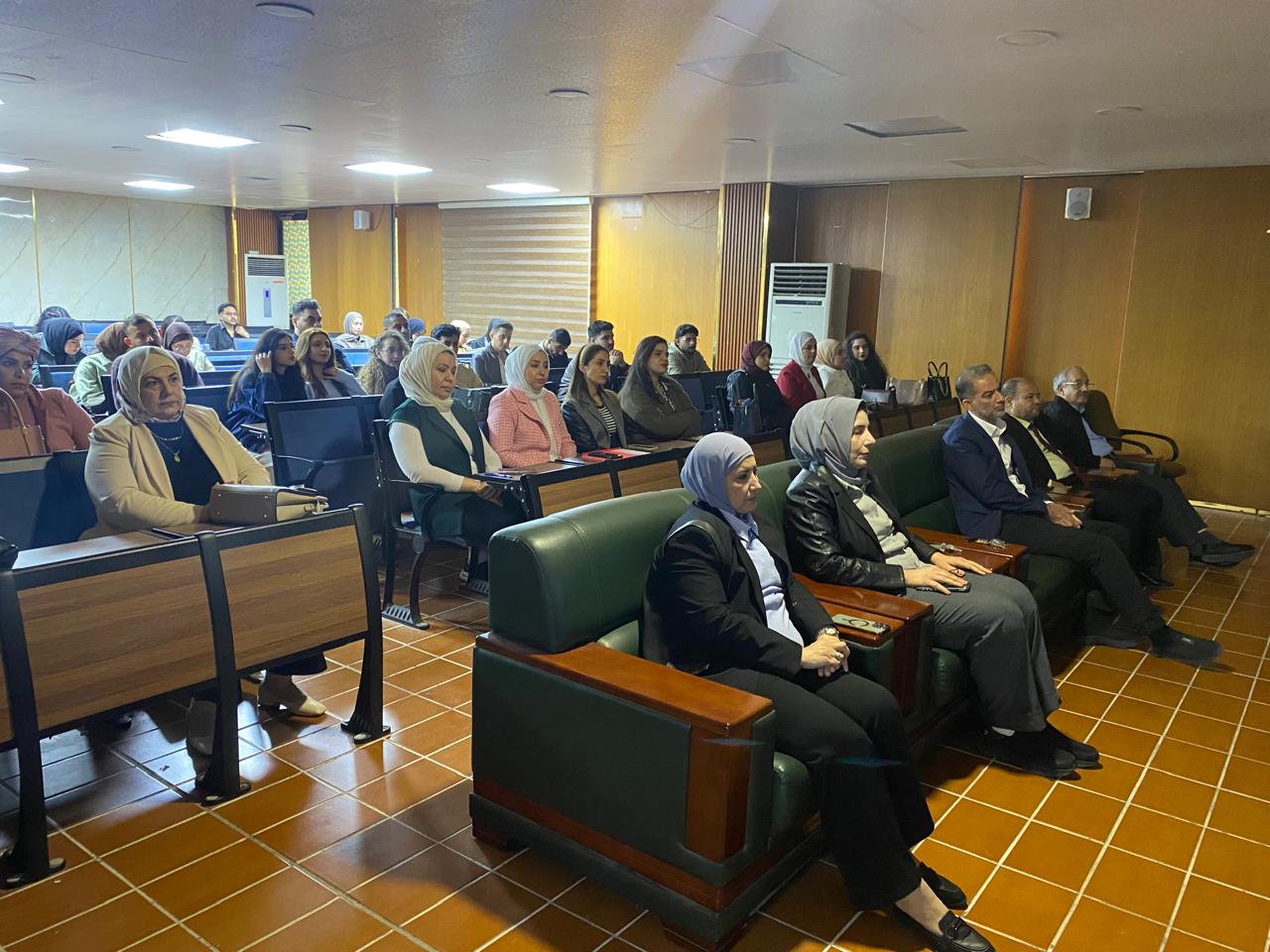
Sponsored by the College of Engineering at Al-Nahrain University and supervised by the Department of Architecture and in celebration of National Planting Day, a specialized workshop entitled "Urban Afforestation: A Mechanism for Achieving Sustainable Development Goals and Mitigating Climate Change” was held on Thursday, March 12. 2026 to discuss the role of urban afforestation as an effective tool for achieving sustainable development goals and contributing to the mitigation of climate change impacts. The workshop included three parts presented by a group of academics and experts, addressing the various environmental, scientific, and practical dimensions of urban afforestation. First Lecture: “The Role of Afforestation in Mitigating Industrial Pollutants” Presented by Senior Engineer Ali Hussein Ibrahim from the Iraqi Ministry of Industry and Minerals. The lecture focused on the vital role played by green spaces and tree belts in industrial sites. It explored how trees function as natural filters, absorbing toxic gases and particulate matter emitted by factory exhaust, thereby improving air quality and reducing industrial pollution. The importance of selecting tree species suitable for industrial environments—based on their ability to withstand harsh conditions and absorb specific pollutants—was also discussed. Second Lecture: “Urban Afforestation and the Sustainable Development Goals: Foundations and Applications” Presented by Prof. Dr. Suzan Abdel Hassan and Dr. Zahraa Mohammed Mousa. The lecture discussed the synergistic relationship between urban afforestation and the Sustainable Development Goals (SDGs), particularly Goal 11 (Sustainable Cities and Communities), Goal 13 (Climate Action), and Goal 15 (Life on Land). The scientific foundations for designing and implementing urban afforestation projects to enhance green infrastructure, improve the mental and physical health of residents, and increase biodiversity in cities were explained. Practical applications and successful models from local and global experiences were also presented. Lecture 3: “Carbon-Neutral Cities and Urban Agriculture” Presented by Prof. Dr. Khaled Abdel Wahab and Prof. Dr. Nofal Joseph. It highlighted the concept of “carbon-neutral” (or low-carbon) cities and the role of urban agriculture and afforestation in achieving this goal. The discussion addressed how green roofs, vertical gardens, and cultivated spaces within the urban fabric can contribute to carbon sequestration, reduce local temperatures (mitigating the heat island effect), and provide local food sources. The lecture also addressed strategies for integrating agriculture into urban planning to enhance the environmental and economic sustainability of cities. Conclusion: The workshop concluded by emphasizing that urban afforestation is no longer an aesthetic luxury, but has become an environmental necessity and a fundamental strategy for addressing climate challenges and achieving sustainable development. It recommended that government and community stakeholders collaborate to develop plans and programs capable of expanding green spaces in Iraqi cities, and to leverage scientific expertise in selecting technologies and plants suitable for local conditions.


